Concrete mixer trucks are essential machines in modern construction that transport and continuously mix concrete from the plant to the job site. Understanding how these trucks work helps contractors optimize delivery times, maintain concrete quality, and select the right model for specific projects. This article explains the mechanical principles, core components, operational workflow, and practical considerations when using a self-loading or transit concrete mixer truck, and highlights relevant solutions offered by Unique Group.
Drum: The rotating container that mixes and retains concrete during transit.
Chute system: Guides mixed concrete from the drum to the point of discharge.
Engine and drive train: Powers both vehicle movement and drum rotation.
Hydraulic or mechanical transmission: Transfers power to the drum rotation mechanism.
Water system: Adds or supplies water for slump adjustments during transit.
Controls and safety systems: Operator interfaces for rotation speed, direction, and discharge functions.
A concrete mixer truck mixes concrete using a rotating drum that has internal spiral blades or fins. When the drum rotates in one direction, the internal fins lift the concrete and allow gravity to tumble it, producing a mixing action. Reversing the rotation causes the fins to push the concrete toward the drum opening for discharge. Consistent rotation speed preserves workability and prevents segregation while in transit.
The drum receives rotational power from the truck engine through a dedicated power take-off system. Power take-off connects to a hydraulic pump or a direct mechanical gearbox. Hydraulic systems are common for modern trucks because they provide smooth variable control and can decouple drum speed from vehicle speed. Operators control rotation speed and direction from the cab or a remote panel, setting slower speeds for mixing and faster reverse rotation for discharge.
Mixing mode: Drum rotates continuously at a moderate speed to keep the concrete homogeneous and prevent setting. Mixing mode preserves slump and reduces voids.
Transport mode: Rotation is maintained during travel to prevent separation. Speed and direction remain controlled to avoid overmixing or excessive air entrapment.
Discharge mode: Drum rotation is reversed to convey concrete out of the drum and into the chute or pump system.
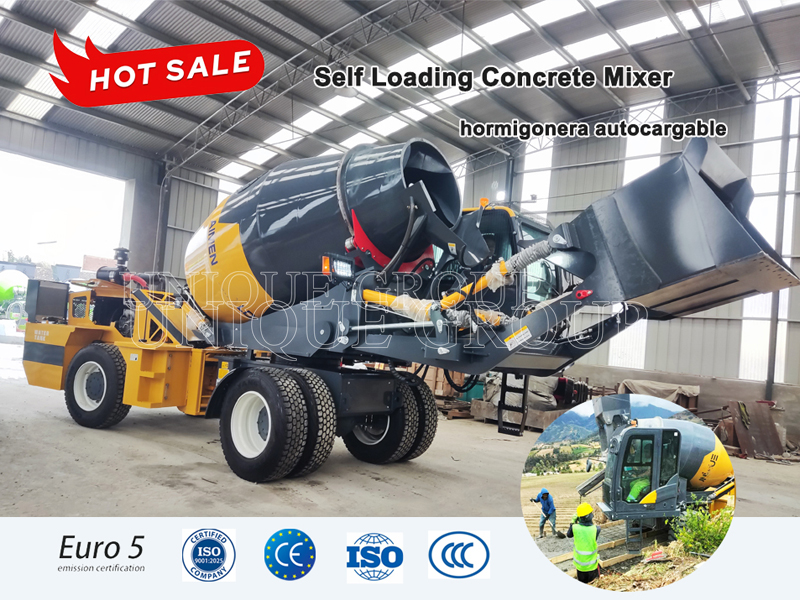
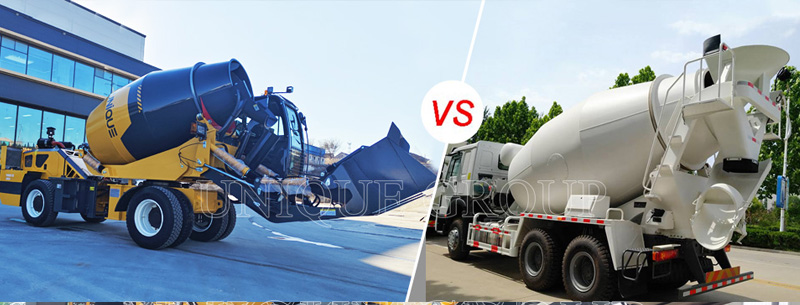
Self-loading concrete mixer trucks combine the functions of a loader, mixer, and transit truck into a single machine. These units can load aggregates and cement, weigh or meter materials, mix in the drum, and drive directly to the pour location. The integrated loader bucket and 270-degree slewing drum design allow bidirectional operation and high site flexibility. Self-loading trucks reduce the need for separate loading equipment and shorten cycle times for small-to-medium jobs.
Material loading: Aggregates and cement are loaded into the hopper or drum by the integrated loader or external equipment.
Batching and mixing: Materials are added in measured proportions with water metered into the mix. The drum rotates to mix until the desired consistency is reached.
Transit: The truck travels to the pour location while the drum rotates at mixing speed to maintain uniformity.
Pouring: The drum reverses, conveying concrete through the chute. Chute extensions or pumps direct concrete to the pour point.
Cleaning: After discharge, the drum and chutes are rinsed with water to avoid setting inside the equipment.
Concrete mixer trucks come in multiple configurations to match project needs. Transit mixers prioritize large-volume transport for ready-mix plants. Self-loading mixers prioritize site autonomy and flexible sourcing. Drum capacities, engine power, hydraulic designs, and optional water tanks or admixture dispensers are common customization points. Choosing the right configuration depends on project scale, distance to plant, site access, and labor availability.
Drum rotation speed and consistency directly affect mix homogeneity.
Loading sequence and measurement accuracy influence final strength and workability.
Transit time and ambient temperature impact setting time and slump.
Proper water management prevents over-dilution or premature stiffening.
Regular maintenance of seals, blades, and hydraulic systems avoids contamination and mechanical failure.
Inspect and replace worn internal blades to maintain mixing efficiency.
Check seals and gaskets to prevent leakage and material buildup.
Service hydraulic pumps and filters on recommended intervals to ensure reliable drum control.
Keep the water system clean and functional to enable slump adjustments.
Clean the drum and chutes after each shift to prevent hardened residues that reduce capacity and complicate mixing.
Operators must follow safety protocols when loading, mixing, and discharging. Stabilize the truck on level ground during discharge. Use personal protective equipment when handling cement and admixtures. Implement dust control measures during loading and cleaning. Proper washout management prevents environmental contamination and complies with local regulations.
Manufacturers that combine practical design with robust service networks deliver better uptime and lifecycle cost. Companies offering self-loading mixer trucks provide compact, multifunctional machines that reduce the need for auxiliary equipment. Unique Group supplies self-loading concrete mixer trucks that integrate mixer, transit, and loader functions and provide 270-degree drum slewing for bidirectional operation, making them well suited for projects that require mobility and on-site mixing efficiency.
Concrete mixer trucks operate on a simple but effective rotating-drum principle that mixes and conveys concrete through controlled rotation and discharge. The choice between transit mixers and self-loading mixers depends on project logistics, volume needs, and site constraints. Proper operation, timely maintenance, and selection of the right machine configuration maximize concrete quality and job-site productivity. For contractors seeking multi-functional, efficient self-loading solutions, manufacturers that design integrated loader-mixer-transit vehicles offer compelling operational advantages.